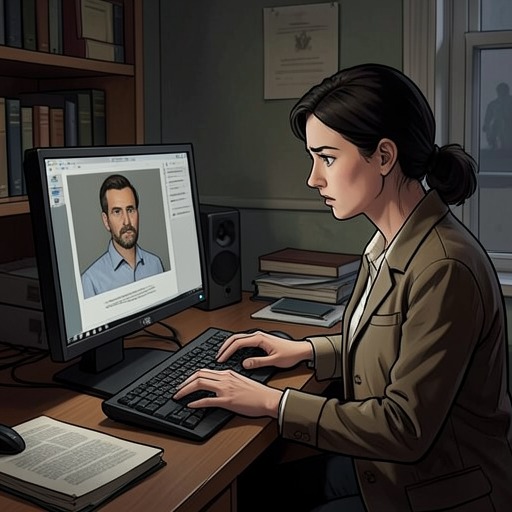
Misuzu Goto
A ManMisuzu Goto is a web designer and part-time bartender whose past relationship with Daisuké Taniguchi makes her an important witness in Kido’s search for the man whose identity was assumed by X. She offers more than a route to Daisuké: her recollections of his character, his family’s treatment of him, and the risks surrounding his father’s liver transplant reveal the human cost behind the identity mystery. Her attachment endures after more than a decade without contact, but it also becomes entangled with a false online account, an uneasy bond with Kyoichi Taniguchi, and an attraction that Kido only gradually recognizes.
Identity and Introduction
Toward the end of January 2013, after his work had settled down in the new year, Kido arranged to meet Misuzu, whom Kyoichi had identified as Daisuké’s former lover. The phone number Kyoichi had provided no longer worked, but he had also said that Misuzu was a web designer. Kido used that clue to find her Facebook page and sent her a message explaining his inquiry. Her quick reply conveyed confusion and worry about Daisuké; she asked him to meet at a friend’s bar in Tokyo, where she worked nights on the side. Kido doubted the bar would be an appropriate place for their conversation, but agreed, supposing she was wary of meeting him alone.
The meeting took place in Arakicho, an old Shinjuku district of closely connecting alleys lined with bars and restaurants, a short walk from Yotsuya-Sanchome Station. The setting was not simply a neutral interview room: it was where Misuzu worked, and Kido entered her world as an unfamiliar visitor seeking information about a private history. Her night work at the bar existed alongside her work as a web designer, while her existing ties to the Taniguchi brothers meant that Kido was asking her to revisit a story she had not discussed with Daisuké for years.
Misuzu had known Daisuké since high school. She described their relationship as an on-and-off romance that lasted for a time, and said this history was why Kyoichi thought she might know how to reach his brother. She also knew Kyoichi well enough that his referral did not make her a stranger to the family. Yet familiarity did not mean that she had current knowledge: she told Kido she had not been in touch with Daisuké for more than a decade and had no idea what his life was like now.
Testimony and the Liver-Donation Crisis
Misuzu brought Kido a brown envelope containing three photographs of Daisuké from the period when they were together. They were more recent than the few images Kyoichi could provide, though already more than ten years old. Kyoichi’s available family photograph showed Daisuké only in a tiny profile view; the brothers’ falling-out had left him without adult pictures of Daisuké, and the family images from their childhood predated the common use of digital cameras. In Misuzu’s photographs, Daisuké faced the camera with a stiff, bashful expression, the look of someone shy in front of a lover. The images helped Kido confirm a crucial difference: Daisuké did not resemble X.
Misuzu could not identify X as Daisuké. When Kido asked whether she recognized the man in the photograph, she shook her head and noted that the two men looked nothing alike. She also remembered Daisuké as somewhat taller than Kido, while the man in the picture seemed too short to match him. Her inability to recognize X mattered as much as the photographs: someone who had known Daisuké intimately could not reconcile his appearance with the identity X had used.
Kido asked whether Daisuké had felt hurt by the dispute over a liver transplant. Misuzu immediately asked who had told him about it; Kido explained that he had heard the account from X’s wife, because X had discussed the matter with her. Misuzu then described the danger involved in living-liver donation as she understood it: the figure she had heard was that approximately one donor in 5,500 in Japan died. Her reaction put the family conflict in the context of an actual medical risk, rather than treating Daisuké’s hesitation as a mere failure of filial duty.
Her memories also showed why the decision had become so painful. Kyoichi, she said, called Daisuké a little shit and never appreciated what he did. He could not understand—or accept—that Misuzu would date his brother. He had complicated feelings about his supposedly unsuccessful younger brother being in a position to save their father’s life, and became irritated when Daisuké could not make up his mind. Misuzu recalled that Kyoichi dismissed the danger, telling Daisuké that the risk was no big deal and that he should stop acting as though he were doing their father a great favor. Kyoichi said that if his own liver had been suitable, he would have kept quiet and accepted the risk himself. Through Misuzu’s account, the transplant crisis emerges not only as a medical decision but as a family contest over who had the right to hesitate, who was expected to sacrifice, and how resentment shaped the language of obligation.
The False Account and a Renewed Search
Years later, Kido’s search for the real Daisuké remained stalled, and he had largely given up on Kyoichi’s help. An email to Misuzu about seeing her on television unexpectedly reopened the trail. Misuzu told him she had appeared in a television feature after taking part in two counter-demonstrations. In the same exchange, she said she had quit Sunny at the end of the previous year and preferred to explain her reasons in person. Kido was disappointed to learn that he would no longer see her at the bar; he realized that even when he had considered dropping by after visiting a boxing club, she had already left.
The decisive lead concerned the Facebook account that Misuzu had maintained under Daisuké’s name. Someone had reported it as fake, and the account was temporarily blocked. Although Misuzu soon regained access, she stopped posting. She had felt reservations about impersonating Daisuké from the outset, and her relationship with Kyoichi had become, in her description, unmanageable. The account therefore embodied an unstable mixture of longing and misrepresentation: it kept a connection to Daisuké’s name alive while also putting Misuzu in the position of speaking as someone who was not there.
Misuzu found the next clue by chance while checking a separate Message Requests folder in her personal Facebook account. She discovered years of messages she had not seen and then returned to the fake Daisuké account, where she found the same kind of hidden folder. Among its messages was a warning from an account named Yoichi Furusawa, written in Roman letters, with no photos and hardly any posts. The sender claimed to be a legal representative and demanded that the fake account be erased, threatening appropriate legal measures. The message did not identify whom the writer represented, and the account showed no sign of subsequent activity. Misuzu inferred that this user had probably caused the temporary block, but her more personal intuition was that Yoichi was Daisuké himself.
When Misuzu asked to attend a meeting with the person behind the message, Kido contacted Yoichi Furusawa on her behalf. The purported client initially did not want to see her. Misuzu insisted that if he was going to apologize, he should do it in person, and Kido passed that condition along. After a short delay, the reply consented to Goto’s attendance. The meeting was set for the first Saturday in March in Nagoya. Misuzu’s insistence transformed a hidden online warning into an actual encounter: she was not content to let the man she believed was Daisuké communicate only through an anonymous account.
Attachments, Boundaries, and Kido’s Perspective
Misuzu’s history with Daisuké is marked by affection but not by uninterrupted contact. She and Daisuké repeatedly dated and broke up; eventually, more than ten years passed without their being in touch. Still, when she spoke of him, her concern was immediate. She called him unfortunate and described his life as hard, linking that sympathy to the donation dispute and the contempt he faced from his brother. The old photographs, the medical risk she remembered, and her readiness to respond to Kido all show different forms of an attachment that survived without a current relationship.
Her connection with Kyoichi was more strained. Kyoichi treated her as someone who might know how to find his brother because of her past with Daisuké, but Misuzu’s own account made clear that she also knew Kyoichi’s hostility and jealousy. He disparaged Daisuké and could not accept Misuzu’s choice to love him. Later, Misuzu described her relationship with Kyoichi as unmanageable. The two brothers’ conflict did not remain contained between them: it shaped the expectations placed on Misuzu, who was asked to serve as a bridge to Daisuké while carrying her own memories of how the family had treated him.
Kido, meanwhile, was personally affected by his closeness to Misuzu. During their earlier conversation, he recognized a psychological passageway between himself and X, opened by their shared experience of having their Japanese identity questioned. That recognition did not make Misuzu merely a source of evidence; their conversations also drew Kido into imagining another life through her. When she later mentioned that she had had a crush on someone for about a year, he was taken aback. He recognized that he had failed to notice her feelings and had naively concentrated his jealousy on people nearby, including Takagi and the Taniguchi brothers. The unnamed rival she mentioned intensified his sense of triangular desire, even though Kido and that rival had never met.
Misuzu’s account of workplace conduct also shows her resisting the assumption that men’s behavior toward her was her responsibility. She described being lectured that she invited unwanted attention by leaving a crack in her defenses, and contrasted Takagi’s vulgar attempt to get her to go home with him after work with his conduct when she had visited as a customer. Kido told her he did not think it was her fault. Her sour smile and ensuing disclosure of her crush shift the conversation from defending herself against blame to revealing a private feeling, one Kido receives with concealed surprise.
Narrative Significance
Misuzu’s evidence makes identity visible through intimacy and contrast. Kyoichi’s sparse family image cannot show Daisuké clearly, while her photographs preserve a bashful face that Kido can compare with X’s. Her testimony also separates what she knows from what she does not: she can describe Daisuké’s height, their years together, and his family’s treatment of him, but she cannot claim to know where he has been during their decade apart. That limit lends weight to her suspicions about the anonymous account without turning intuition into proof.
The false Facebook profile is a particularly revealing extension of the book’s concern with borrowed identity. Misuzu’s choice to post as Daisuké began with reservations and later stopped after the account was reported; nonetheless, the account became the place where a possible message from the real Daisuké was hidden among overlooked requests. The impersonation both obscures and unexpectedly helps disclose identity. Her willingness to meet the person behind the warning, and to require an apology in person, insists on a difference between a name used online and an accountable human presence.
Misuzu also gives Kido a route into emotional territory that his investigation alone would not reach. Through her memories, the transplant decision becomes a story of risk, sibling resentment, and unequal demands for sacrifice; through his response to her, the search acquires the pressure of attraction and jealousy. She remains neither simply the lost lover who can retrieve Daisuké nor simply a witness to the past. Her choices—preserving photographs, abandoning the fake account, following the hidden message, and asking for a face-to-face meeting—make her an active participant in the effort to reconnect a name with the person who belongs to it.